May is Osteoporosis Awareness Month, so I wanted to share some information about building and maintaining strong, healthy bones.
Over the years, I have had many clients who are very active and healthy diagnosed with osteopenia or osteoporosis and wonder, “How could this happen?” The truth is, there are many factors that contribute to bone loss.
As we age, the body naturally breaks down bone faster than it rebuilds it. Bone density gradually decreases over time, especially after age 50. Hormonal changes also play a major role, particularly during menopause. This is one reason osteoporosis is discussed more often in women, although it does affect men as well. (Lucky for them, they don’t have to go through menopause!) Other Factors include lifestyle, genetics, certain medications, some chronic healthy conditions etc. For this blog post I wanted to focus on the importance of strengthening bones.
What Is Osteoporosis?
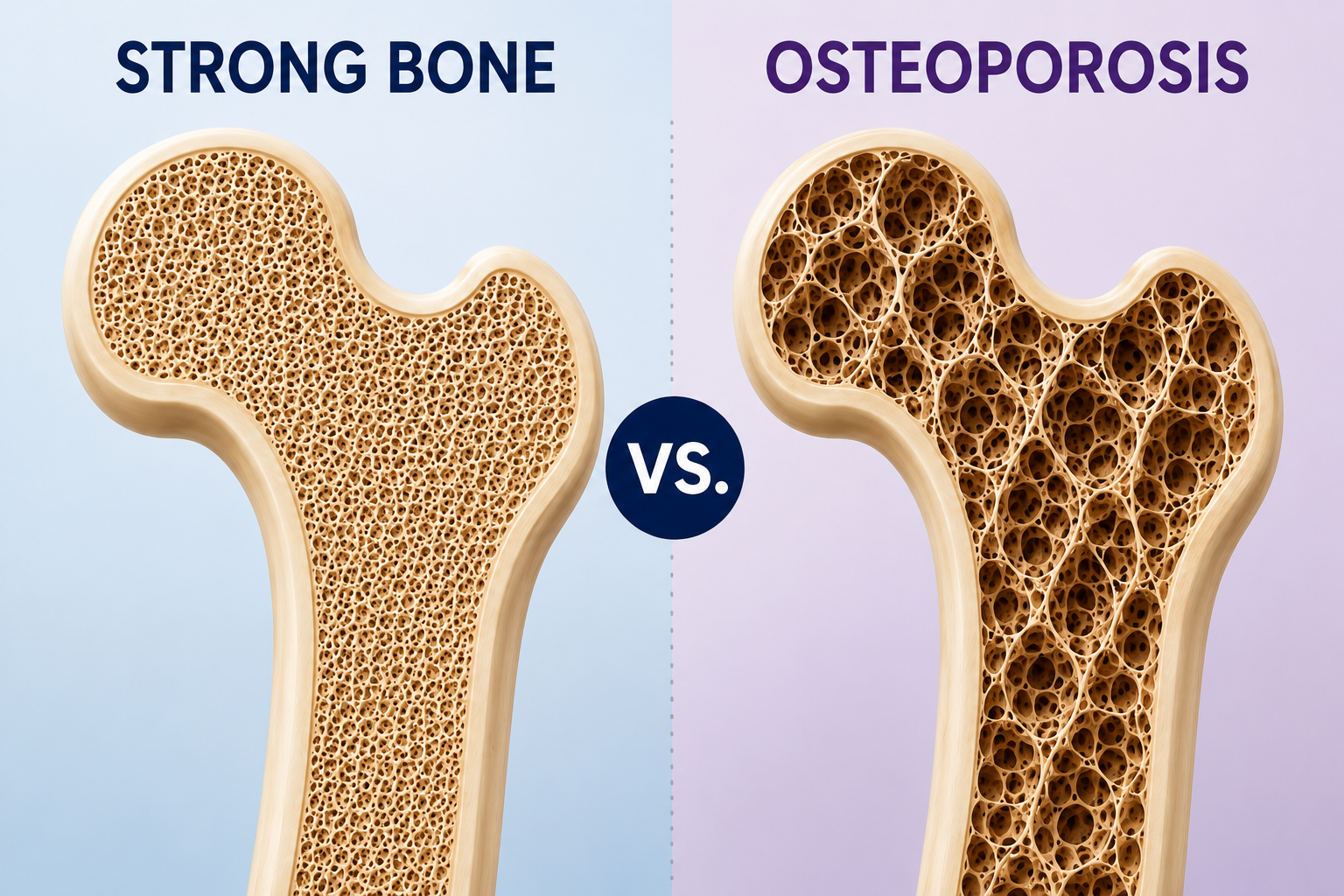
Osteoporosis is a condition where bones become weaker and more fragile over time, increasing the risk of fractures — especially in the hips, spine and wrists.
One of the challenging things about osteoporosis is that bone loss often happens silently, without symptoms, until a fracture occurs.
Why Strength Training Matters for Bone Health
To improve or maintain bone density, our bodies need strength training and resistance.
When muscles work against resistance, they pull on the bones. This signals the body to maintain or increase bone density and helps slow bone loss. In other words, muscles need load in order to build strength — and that same load helps stimulate stronger bones.
Examples of “load” include:
- Weights
- Resistance bands
- Body weight exercises
- Carrying objects
If someone has been mostly inactive, simply adding walking and body weight exercises can absolutely help. However, for many people, walking alone is not enough to significantly strengthen bones. Even people who exercise regularly may not be challenging their muscles enough to create the stimulus needed for stronger bones.
That’s why progressive strength training, balance training, and impact activities are all important for bone health.
Benefits of Strength Training for Bone Health
 Stimulates bone-building cells Helps maintain muscle mass Improves posture and spinal support Increases joint stability Makes everyday activities easier and safer
Examples of Bone-Healthy Strength Exercises
- Squats
- Sit-to-stands
- Step-ups
- Rows
- Wall push-ups
- Carrying weights while walking with good posture
Why Impact Matters for Bone Health
Bones respond to stress and loading. When healthy stress is placed on a bone through movement or impact, the body senses that the bone needs to stay strong and stimulates bone-building activity. This process is called bone remodeling.
When your feet hit the ground or muscles pull on bones during activity:
- Small amounts of stress are placed on the bone
- Bone-building cells become more active
- The body works to strengthen the bone over time
Think of it this way:
Bones adapt to the demands placed on them.
If bones are rarely challenged, the body may gradually reduce bone density because it believes less strength is needed.
Types of Impact That Can Help Bone Health
Low-Impact Activities
- Walking
- Marching
- Stair climbing
- Sit-to-stands
- Heel drops
- Stomping
These activities still create force through the skeleton and can help support bone health.
Here is the link for my YouTube video on heel drops and stomping that you can follow along to. https://www.youtube.com/watch?v=0qGncc4Rg60
Moderate-Impact Activities
- Faster walking
- Hiking
- Light jogging
- Mini hops
- Dancing
- Racquet sports such as pickleball or tennis
These activities increase loading forces through the hips, legs, and spine.
More to come on bone health next month 🙂