Strength training becomes even more important as we get older. It helps us maintain muscle, improve balance, and keep doing everyday activities with confidence.
But whether you exercise at a gym or at home, you may wonder and I get asked frequently :
Should I use strength machines, pick up free weights, or try resistance bands?
The good news is that all three can be helpful—and you don’t have to choose just one. Each option offers different benefits, so the best choice is often the one that feels safe, comfortable, and useful for your goals.
The Benefits of Weight Machines
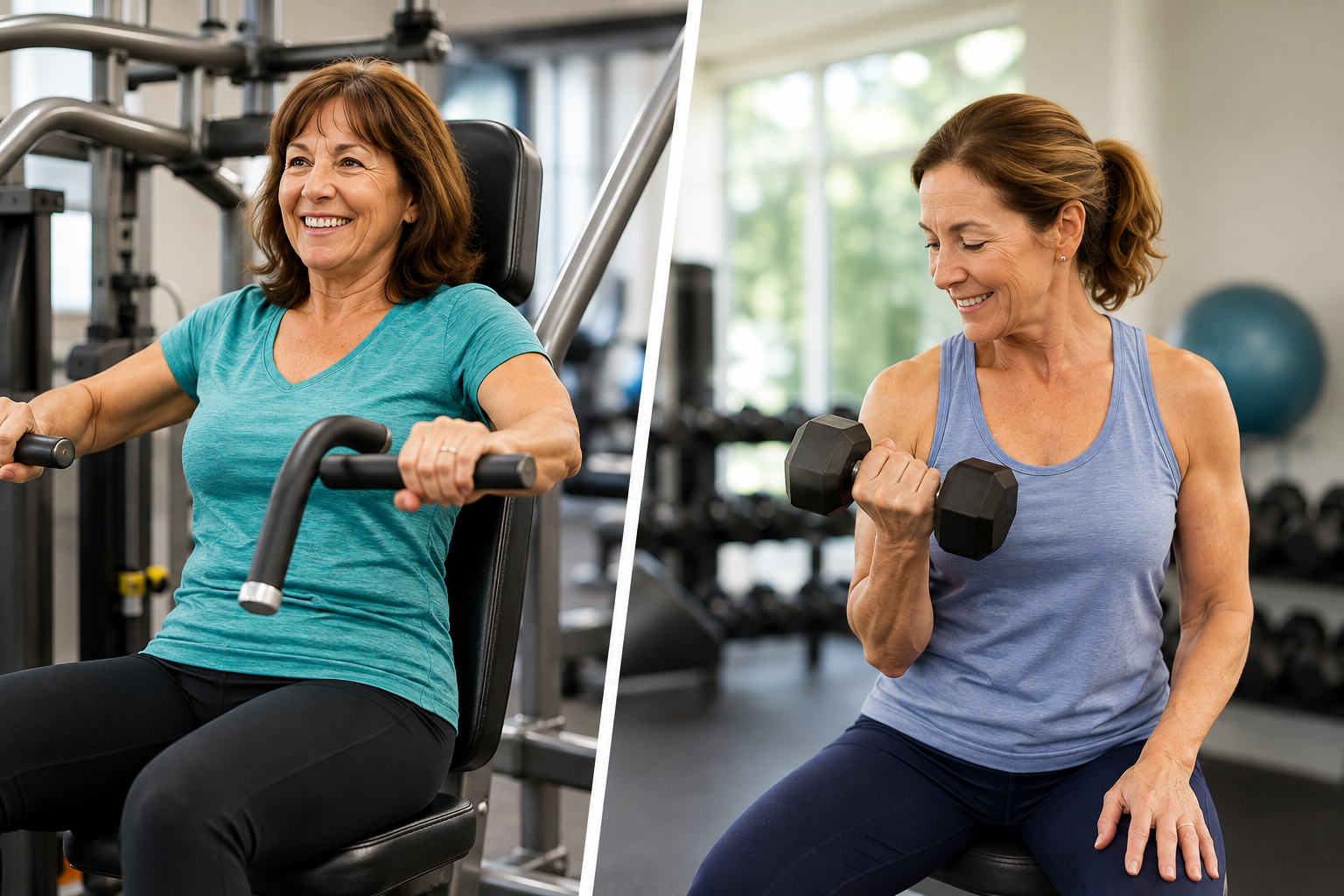
Let’s start with weight machines. They can be a great option if you’re new to strength training or simply appreciate a little extra support.
Machines can:
- Provide stability and help guide your movement
- Make it easy to adjust the amount of resistance
- Let you focus on strengthening a specific muscle group
- Feel less intimidating when you’re getting started
- Be helpful when balance or coordination make certain free-weight exercises challenging
That said, machines aren’t only for beginners. They can be a valuable part of a strength program at any age or fitness level. They may also be especially useful when you want to exercise with more control or support.
The Benefits of Free Weights
Now let’s look at free weights, such as dumbbells, barbells, and kettlebells. Unlike machines, free weights require your body to control the movement from start to finish.
Free weights can help you:
- Strengthen your muscles and the smaller muscles that help stabilize your body
- Improve coordination, body control and balance
- Build strength that carries over into everyday activities
- Add power exercises when they’re appropriate for you
Think about the things you do every day. You pick up grocery bags, carry laundry baskets, lift grandchildren, move objects around the house, and reach for items on shelves. Your body needs to control and move weight without a machine guiding you.
That’s why free-weight exercises can be such a useful addition to your routine. They can help prepare you for the movements you use in real life.
What About Resistance Bands?
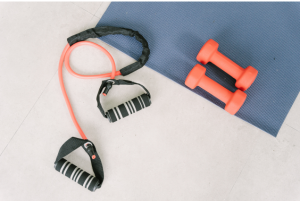
Resistance bands are another convenient option. They aren’t technically classified as free weights because they create resistance through tension rather than through a fixed amount of weight and gravity.
In general, the farther you stretch a band, the more resistance it provides.
Resistance bands can:
- Be easily used at home or while traveling
- Offer a low-impact option that may feel easier on your joints
- Challenge your muscles through many different movements
- Help improve strength, balance, and coordination
- Provide different levels of resistance as your ability improves
Bands can be especially helpful if you don’t have access to a gym or prefer not to lift traditional weights. They’re also easy to store and carry, making them a practical choice for busy schedules.
However, bands may not provide the same amount of resistance throughout an exercise. It can also be more difficult to measure exactly how much resistance you’re using. Even so, they can be an effective and versatile part of a well-rounded program.
So…Which One Should You Choose?
For many adults, the best answer is a combination of machines, free weights, and resistance bands.
Machines can provide stability and controlled strengthening. Free weights can challenge your balance, coordination, and ability to control movement. Resistance bands can offer convenient, versatile resistance at home or on the go.
You also don’t need to lift extremely heavy weights or perform complicated exercises to benefit. Start with movements that feel manageable, focus on good technique, and increase the challenge gradually as you become stronger. If there is one that you prefer, go with that because you will be more consistent with one that you can enjoy.
The goal is to find exercises that are safe, appropriately challenging, and right for your current ability.
Remember This
Strength training isn’t just about building bigger muscles.
It’s about maintaining the strength to get out of a chair, climb stairs, carry groceries, enjoy your hobbies, travel, play with your grandchildren, maintain your balance, and continue living independently.
We aren’t training just to be stronger in the gym. We’re training to stay strong for life!